
Tower 9 | Librarian's Musings, Whispers in the Dark
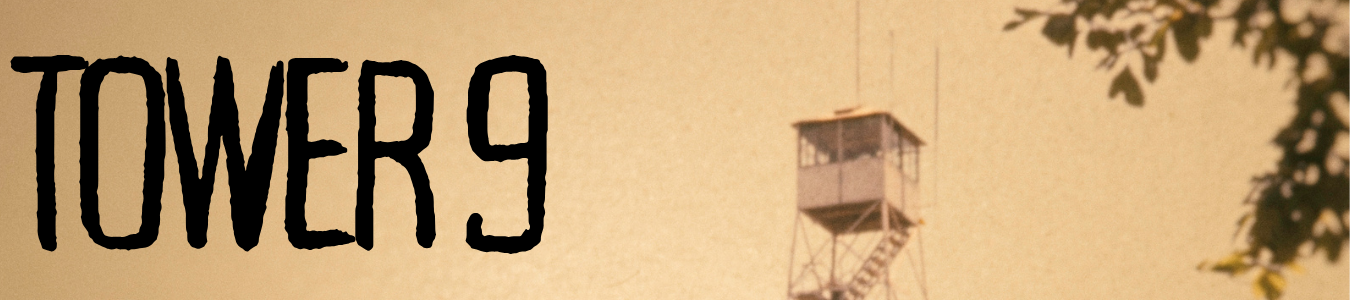
Whispers in the Dark
with Ellie Navarro
Jose drove with the windows down, letting the pine-thick wind rush through the car like a reset button held down just long enough to wipe the last few years clean. The air had that dry, spiced scent of sun-warmed sap and long-decayed needles, a smell he remembered from childhood hikes but hadn’t inhaled in years. The two-lane road wound upward into the mountains, steeper with every bend, the asphalt cracked in places where roots pushed through like veins beneath skin. Tall pines pressed close on both sides, so dense in places they blocked out the sun. His old sedan groaned a little with each climb, tires crunching over loose gravel at the shoulders.
The radio had long since dissolved into static, but he left it on anyway. The hum was a companion of sorts, white noise to crowd out thoughts he didn’t want to pick apart just yet. The silence outside, though, was something else. A different kind of clean. Not sterile, but purified. For the first time in a long while, he didn’t feel watched. It was a lonely kind of peace, and he welcomed it.
The fire lookout tower would be his home for the summer. Perched like a wooden sentinel above the endless canopy, it stood at the edge of the Okanogan forest where the land began to forget people altogether. Four months alone, cut off from town by several miles of dirt road and three radio check-ins a day. He’d be tasked with scanning the horizon for smoke, reading cloud patterns, logging wind shifts, and maintaining a vigilant eye over a sea of trees that could turn deadly with a single careless spark. His job was simple on paper: watch, report, and wait. The safest forest in the continental United States. It was the only reason his parents agreed to it. There had never been an accident in the 62 years it was added as a National Park. Not even a missing hiker here and there, nothing. Jose guessed the park was just in God’s good graces.
Solitude by design. No cell service. No distractions. No past creeping in from the corners. That was the point. He liked that. He needed it. The tower wasn’t just a job, it was a kind of penance, a personal exile disguised as forest service work. Somewhere to relearn silence. Somewhere to start over without having to explain himself to anyone.
Probation hadn’t been the end of the world, but it was close enough to taste it, metallic and sour, like blood in the mouth. One beer too many at his brother’s graduation party, one high-speed joyride into a ditch, and just like that, he was the story people told their kids when they wanted to warn them. His picture didn’t make the papers, but it might as well have. His mother stopped meeting his eyes. His father didn’t yell, which was worse. He got off easy. He knew that. No jail time, no serious injuries. But the guilt stuck to him like soot, thick and clinging.
This job was part of the cleanup. A long, narrow trail back into the good graces of his parents and his own future, laid out in radio check-ins and weather logs. It wasn’t glamorous, but it was real, and real was what he needed. Something predictable. Something quiet. There were no second chances waiting for him in town, only sideways glances and awkward silences. Out here, there were no reputations to rebuild, no one to remind him of what he’d done. Only wind and trees and the chance to be useful.
He caught a glimpse of the tower before he reached it, a thin structure rising from the canopy like it had grown there, pale and skeletal against the green. It jutted above the trees like a toothpick in an overgrown pincushion, its wooden frame silhouetted by the low gold of the afternoon sun. The windows caught the light, glinting like eyes. The clearing around it was ringed with knee-high grass and broken stumps, a ring of space carved out by fire or axe, now softened by time. The dirt drive ended abruptly in a patch of gravel with tire tracks faded to ghosts. He parked the sedan and stepped out, the door thunking shut behind him.
The silence here was deeper. Not just an absence of noise, but a presence of stillness, a waiting hush that felt almost reverent. No birds. No wind. Just the hum of distant insects and the faint crackle of cooling metal under the hood. Everything around him smelled of new beginnings.
The tower stairs creaked under his boots, each step groaning with a tired complaint that echoed faintly through the clearing. One hundred and seven steps to the top. He counted each one like a prayer, the rhythm steady, grounding. As he climbed higher, the sounds of the forest thinned, giving way to wind threading through the wooden beams.
The cabin itself was modest, almost spartan. Paneled in faded wood the color of old tobacco, it had the musty scent of pine and dust and long-forgotten summers. Windows framed every wall, offering a view so vast it seemed to bend the horizon, a sea of green unfurling in all directions beneath a sky streaked with late gold and lavender. The floorboards flexed underfoot, warped by time and weather.
A battered desk sat near the center, scarred with initials, knife marks, and faded rings from decades of coffee cups. A pair of binoculars swung gently from a hook like a pendulum caught in a breeze. The logbook waited in the center, opened to a fresh page. Its paper was yellowed at the edges, the spine cracked from years of daily use. He flipped through a few older entries, mostly weather, patrol times, fire risks. Nothing strange.
He scrawled his name in tight block letters, the pen dragging slightly on the coarse page.
Jose Lopez. June 1st. Arrival. All quiet.
That first night, he cooked dehydrated chili on the small propane stove, its hiss the only sound in the quiet cabin. The smell was metallic and faintly chemical, but he ate it anyway, scraping the bowl clean while staring out the darkening windows. The silence pressed in, but not in a threatening way, more like a heavy blanket he hadn’t realized he needed.
He rolled out his sleeping bag on the narrow cot, the mattress thin and brittle beneath him, rusted springs creaking with every adjustment. He left the windows cracked to let in the night air, cool and sharp with pine.
Outside, the forest hummed in low, nocturnal rhythms. Insects buzzed in brief, electric bursts. Branches creaked under their own weight. A distant owl called once, long, low, and then fell into a silence that felt too deliberate. The shadows pooled differently here, he noticed, slow and thick, as if reluctant to leave the forest floor.
It was peaceful in a way that scraped old noise from his head, like static dissolving into quiet. He pulled the blanket over his chest and listened to the wind sigh across the glass. He watched the sky change by degrees: purple to deep navy to ink-black. The stars came in slow waves, one by one, until the whole ceiling shimmered.
Sometime around midnight, he noticed it. It was small at first, a pinprick in the vast black canvas beyond the treeline. A flicker. Far out on the western horizon. Not a plane, not a drone. A single point of light, steady as breath held in a dark room. It looked like a candle flame in the dark, but colder somehow. White-gold instead of orange. It didn’t move. It didn’t waver. It simply hovered, pinned in place by some invisible thread.
He sat up slowly, his breath fogging faintly in the glass. The light was too distant to make out any features, but its unnatural stillness struck something buried in his gut. He rose and crossed the room in three quiet steps, boots whispering against the warped wood floor. Grabbing the binoculars from their hook, he lifted them to his eyes, elbows braced against the windowsill.
Through the lenses, the light sharpened but didn’t reveal much more. No flare. No flicker. No rhythmic pulse like an emergency beacon. Not lightning. Not fire. It wasn’t flickering like flame or blinking like aircraft. It was just there, bright and unnatural against the otherwise perfect black.
He scanned the surrounding tree line, panning slowly left and right, but there was nothing else. No structures. No towers. No signs of human activity. Just the still silhouettes of trees and the slow, steady light. His mouth felt dry. He licked his lips and forced himself to breathe evenly.
He logged it. Just in case. The pen felt heavier in his hand.
01:12 AM. Light on western horizon. Possibly another tower? Too steady to be a wildfire. Will monitor.
He set the binoculars back on the hook and let the lenses swing, gently, as though they too had seen something unsettling. The wind picked up, sliding through the cracked window seams with a rising pitch that whined through the cabin like a held note. Something thudded once against the tower’s support beams, a dull, solid knock from below. He froze. Waited. Counted seconds. Nothing followed. Probably a loose branch or a squirrel.
He climbed back into the cot and lay still, heart tapping a little faster now. The shadows outside pressed against the glass like smudges in the corners of his vision. He didn’t close the window. He wanted to hear if the sound came again.
He slept lightly and dreamed of nothing.
In the morning, the strange light was gone. The forest, under the hazy spill of daylight, looked boring and ordinary in that way forests do when nothing’s burning. Jose stood on the catwalk with a mug of coffee and tried not to feel ridiculous. Whatever he’d seen the night before, or thought he’d seen, had vanished without a trace. No scorched bark, no flattened grass, no footprints in the damp soil. If anything had wandered near the tower, it hadn’t left so much as a pawprint behind.
By nine a.m., he had settled into routine. He recorded the weather in the logbook, made his standard notes on visibility and wind direction, and called in to the district office. The radio worked fine. Tinny and hollow, but responsive. He spoke with a woman named Margie, who sounded half-asleep and utterly unconcerned. No new fires reported. No incidents.
By noon, he’d finished a full, slow lap around the catwalk, one hand gripping the field glasses, the other wrapped around a dented thermos of weak coffee that had long since gone cold. He paused every few feet, elbows braced on the railing, sweeping the horizon with the binoculars in long, practiced arcs. To the north, the ridgeline sat sharp and steady against a pale blue sky. To the west, a river glinted through the pines like a silver thread. No smoke. No heat shimmer. Not even the dusty flicker of a trail left by elk or mule deer.
Below, the trees stood motionless, a deep green ocean with no tide. Even the wind had gone elsewhere. Somewhere between the rhythmic glass-lifting and the occasional sip, Jose noticed how quiet it had become. The kind of silence that made your ears ring if you focused too hard.
The air had a cracked quality to it, brittle and electric, like the world was holding its breath. He flexed his fingers, the joints stiff from the dryness, and leaned on the rail a moment longer, letting the stillness soak through him. There was nothing out of place. But that didn’t make it any easier to relax.
In the late afternoon, he spotted a red-tailed hawk circling above the southern ridge, gliding on a lazy spiral of warm air. Jose tracked it for nearly five minutes, admiring the effortless grace of its flight. When it finally veered off toward the distant peaks, he noted the sighting in the logbook, marking the time with the kind of quiet satisfaction that came only from long days spent alone in high places. It wasn’t thrilling, exactly, but it was something. A record of time passing.
He moved through the rest of his chores like a man stretching his limbs after sitting too long. The hinge on the supply cabinet had already started whining when he first arrived yesterday, a rusty complaint every time he opened it to grab coffee filters or spare batteries, so he dug out the oil can and worked the pin until the metal stopped complaining. He checked the propane levels, rewound the weather station recorder with slow, deliberate motions, and swept out the moth graveyard behind the heater, a delicate pile of wings and dust that had accumulated unnoticed. He dumped the debris in a tin pail, pausing only when a spider skittered from the shadows and disappeared behind the stove.
He stood at the window for a while as dusk settled, watching the color drain from the forest. The treetops turned dark and soft-edged, melting into the deepening blue. The last birds quieted, their calls tapering into the long hush of evening. He checked the clock, 7:45 p.m., then crossed to the desk to make his evening radio call. It was part of protocol: morning and night check-ins, even if there was nothing to report.
He keyed the mic and waited for the usual delay of static. “Tower 9 to base, evening check-in. All clear, no activity to report. Weather stable. Visibility good.”
There was a pause, a little crackle, then Margie’s voice filtered through, clearer now. “Copy that, Tower 9. Got you down. Talk to you tomorrow.”
He almost thanked her for being there, but the line had already gone quiet. He set the radio back in its cradle and hesitated a moment, listening to the hum of the tower around him, the gentle tick of cooling metal, the faint creak of the structure adjusting to the night air. He thought about calling her again, just to hear another voice, but decided against it. There would be nothing to say.
Dinner was a can of Hormel chili that he heated over the propane burner, the metal hissing faintly. It tasted metallic and a little sour, but he ate all of it while flipping through a battered Louis L’Amour paperback he’d read at least twice before. The plot was thin and familiar, gunslinger drifts into town, trouble follows, but it passed the time.
He didn’t check the tree line before turning in. Didn’t scan for lights, didn’t listen for knocks. The cot creaked beneath him as he rolled onto his side, and for the first time in days, he let the quiet be just that, quiet.
If anything came in the night, he slept through it. If the light returned, it stayed where it belonged: out of sight, tucked behind the dark wall of trees, patient and waiting.
The next day unfolded in much the same way, steady and deliberate, like the ticking of an old clock. Jose woke to the smell of pine needles warming on wood, the air cool but still. The tower creaked in the morning breeze, a soft and familiar protest from its beams and bolts, like it was stretching after a long sleep. Somewhere below, a woodpecker started up with an uneven rhythm. The sky was overcast, the clouds thin and slow-moving, casting the forest in a soft, milky light that felt gentle after the previous day’s harsh sun.
He brewed his coffee on the propane burner, listening to the kettle whine. As it hissed and clicked, he stepped out onto the catwalk barefoot, mug in hand, and leaned on the railing. The view was a quiet painting: slate sky, tall green sentinels, the distant spine of the mountains shadowed and steady. The air smelled like moss and bark and something faintly metallic.
After his morning sweep with the binoculars, he checked the radio. Morning call-in went smoothly, Margie answered on the second try, less sleepy than the day before, with a kind of rehearsed cheerfulness that made him imagine her in curlers and slippers, a lukewarm cup of tea nearby. No fires. No updates. “Looks like another easy one,” she said.
He logged the temperature, visibility, wind direction, and cloud type, altostratus, mostly, with the occasional cumulus building toward the western edge. Then he stepped outside again, took another slow lap around the catwalk, and let the stillness settle in his chest. The trees below were unmoving, almost frozen in place. Nothing out of place. Just the day breathing along without him.
Just before lunch, the signal on his phone, usually unreliable and hovering between a single bar and nothing at all, flickered long enough for a notification to push through. It was an email from his mom. Short and sweet, Martin was back from college for the summer, apparently tanned and talking about hiking trips and he got that new tattoo she hadn’t approved of. Her tone was light, laced with the kind of relief that came from having both sons on solid ground again.
Jose smiled and typed a quick reply: All’s good up here. Quiet. Tell Martin hi for me, and that I call dibs on the hammock when I get back.
He hit send and leaned back in the chair, letting the silence roll back in.
The afternoon drifted by without incident. Jose moved through the tower like a man who had already memorized the shape of his day. He checked for signs of smoke, scanned the ridgelines in slow, thoughtful arcs, and jotted careful notes about the shifting cloud cover. The air had changed, not drastically, but enough to make him stop and sniff the breeze more than once. There was weight to it, a gathering hush in the way the light thinned across the treetops and the way the birds fell silent without fanfare.
Around three, the sky began to dim. There was no drama, just a slow flattening of color, like someone had turned the contrast down on the world. The breeze stirred the tops of the trees and then faded, replaced by a low, insistent pressure. A single soft roll of thunder pulsed from the west, far off, almost apologetic. Then came the rain.
It started as a whisper against the tower roof, a brittle tapping that became a steady, deliberate rhythm. Jose watched it build, the drops chasing each other down the windows, tracing paths through the layer of dust and pollen. The air turned cool and thick with the scent of wet bark and ozone. He stepped out onto the catwalk without his coat, ignoring the rational voice that suggested otherwise.
The first drops struck his arms like pinpricks. Within minutes, his shirt was clinging to him, the fabric dark and heavy with water. He sat on the edge of the catwalk, boots dangling, rain pooling in the leather seams. The metal beneath him was slick, but he didn’t care. He leaned his head back and let the rain pour across his face, into his hair, down the back of his neck. Cold. Clean. Immediate.
For a while, he didn’t think about anything. Not the probation. Not the tower. Not the routines. Not the light from the other night, not the silence that had pressed on his shoulders since before he arrived. The rain gave him permission to just be still. Just exist.
The smell of wet pine rose up from the forest like incense. Somewhere far off, another low rumble of thunder echoed through the hills, long and low and distant. The sky opened a little more, and the patter became a hum.
Jose closed his eyes and sat there, water rolling down his temples and over his eyelids, soaking through to the skin. He didn’t shiver. He didn’t move. For the first time in months, something inside him let go, and the peace that replaced it was so gentle it quieted something in him, something coiled and restless that he hadn’t been able to name until it finally went still.
That night, the tower was warm, dry, and quiet. He logged his evening check-in, read another few chapters of the Louis L’Amour, and fell asleep without thinking of the light.
The next morning, he felt lighter. Nothing overwhelming, but something about the previous day’s storm had rinsed the weight off his shoulders. He woke with the windows still cracked, and the breeze that filtered in carried the sharp, sweet scent of rain-soaked pine. There was a spring in his step as he brewed his coffee and moved through the now familiar rhythm of the day, morning check-in, weather log, a slow lap with the binoculars.
Nothing unusual again. No movement below the canopy. Just the forest resuming its quiet, timeless breathing. He ate a peanut butter sandwich on the catwalk for lunch, took inventory of supplies, swept the floor again just to have something to do. The soft rhythm of the day carried him from task to task, easy and uninterrupted. He organized a few loose papers, straightened the contents of the first-aid kit, and even took ten minutes to just sit by the radio with his eyes closed, letting the silence hum in his bones.
The late afternoon came with more clouds, but no rain. He watched the sky darken by degrees, the air growing still again, this time less charged, more settled. It felt like the forest was tucking itself in. He made a quiet dinner, crackers, canned tuna, and an orange that was more rind than fruit, and sat with his boots off, toes flexing against the cool wood floor.
His evening check-in was uneventful. Margie answered quickly, almost cheerfully, and they exchanged a few extra words about the week ahead, cooler temps, wind from the north. Nothing serious.
Afterward, he read on the cot, the book balanced on his chest, and let the sounds of the tower fill the space: the settling boards, the quiet rasp of his own breath, a single fly buzzing against the screen.
The night passed gently, at least until the buzz from his phone startled him from near-sleep. It was well after midnight. He reached for it automatically, silencing the old notification, then glanced toward the window across the room.
A glow caught his eye, faint but unmistakable, out past the line of trees where the hills dipped and rose again. It was too steady for fire, too cold for a lantern. There was nothing warm or natural about it. Just a pale, fixed presence, unchanging, detached, almost clinical.
It stood out in the darkness just like the first time. But now, everything around it seemed suddenly wrong. The trees nearby felt less like trees and more like shadows pretending. The hills no longer sat easy on the horizon. Even the stars above seemed to dim a little, as if the sky itself leaned away from that spot of light.
It was still far off, but closer than before.
Jose sat up slowly, the cot creaking beneath him. His breath went shallow. The room felt colder, though the windows were still shut. He listened, but the night had gone unnaturally quiet, no insects, no wind, not even the usual groan of wood cooling in the frame. The silence pressed against the glass like it wanted in.
He didn’t move. Just watched. Just waited.
The silence stretched on, dense and unnatural, like the whole forest had been put under glass. His ears strained for something, anything, but there was nothing. Not the wings of a moth batting against the screen, not the distant yip of a coyote, not even the subtle shifting of trees in the wind. The quiet pressed in until it felt like he could hear the inside of his own skull, the pulse ticking behind his jaw, the slow drag of his breath through his nose.
He stayed frozen long after he first spotted the light, unsure how much time passed. It could have been minutes, could have been an hour. The glow never moved, never flickered. It simply remained, cold and still, like it was waiting for something, or someone, to acknowledge it.
And then, slowly, quietly, it faded. The edges blurred, the intensity softened, and within a few breaths, it was gone. Not snuffed out, not extinguished. Just… withdrawn, like a hand pulled back into a sleeve.
The silence remained for a moment longer, deep and watchful, before loosening its grip.
A single rustle stirred somewhere below, followed by the call of a night bird. The creak of a branch. Then came the crickets, timid at first, then steady, a thousand tiny legs rubbing in chorus. The tower sighed as it cooled, the wood relaxing with soft cracks and groans. The wind returned in a whisper through the open window.
Jose sat very still. Then finally, finally, he let out the breath he hadn’t realized he’d been holding, and the world around him felt like itself again.
The next morning, he went about his routine, but something about him had changed. He still brewed his coffee, still ran his slow sweep of the forest with the binoculars, still keyed in his morning check-in like clockwork, but there was a tension in him now, a stiffness in the shoulders he couldn’t quite stretch out. He told himself it was nothing, just a dream leftover from sleep. Maybe the moonlight catching a patch of fog. Maybe a trick of distance and exhaustion. But it clung to him.
After relaying the morning report to Margie, he hesitated before letting go of the mic. He pressed the talk button again.
“Hey, Margie?” he said, keeping his voice light, casual. “Has anyone else out this way reported… strange lights at night? Like way out past the tree line?”
There was a pause, longer than usual, followed by a short crackle and her voice again. “Strange lights? No, not that I’ve heard. You mean like a plane or something?”
“No,” he said, quickly. “No, not a plane. Never mind. Probably nothing. Just… weird reflection, maybe.”
“You sure?”
“Yeah. All good.”
He put the mic down gently. Didn’t log the conversation.
The rest of the day moved like it had the ones before, slow, steady, quiet. He logged the weather, scanned the ridgelines, organized gear that didn’t need organizing. Ate another sandwich. Tried to read. Tried not to glance at the window every ten minutes. But no matter what he did, the feeling stayed.
By mid-afternoon, he found himself checking the clock more often, marking the hours with a kind of creeping apprehension. The sky remained stubbornly calm, patches of blue between wide drifts of cloud, and the wind had picked up just enough to stir the trees without making a sound of it. He swept again. Rearranged the books on the shelf. Sat in the chair, stood up, walked a slow circle, sat again.
It was the waiting that got to him. Waiting for nothing in particular, and yet dreading the moment night came.
The glow hadn’t done anything. It hadn’t moved. It hadn’t made a sound. It had just been there, and still, some part of him felt like it was not right. Like it had reached into the tower and planted a seed of discomfort just deep enough to take root.
As dusk approached, he caught his reflection in the window, creased forehead, set jaw, eyes a little too wide. He barked out a short laugh and shook his head.
“It’s just a light,” he muttered, the words oddly loud in the quiet cabin. “Just a damn light.”
He said it again, more softly this time, as if that might convince something in him to believe it.
Still, as the shadows lengthened across the floor, Jose felt the dread rise up, quiet and steady, like a slow pressure building behind his ribs, steady and inevitable.
He didn’t bother pretending he was going to sleep. Not tonight. When the last light drained from the sky and the dark bled in through the windows, he sat on the edge of the cot and waited.
He didn’t turn on the lantern. The only illumination came from the pale blue face of the clock above the door and the distant sheen of moonlight spilling through the glass. He sat still, elbows on his knees, hands steepled beneath his chin. From time to time, he blinked hard, not out of sleepiness, but something closer to disbelief. Like if he didn’t move too much, he might catch it before it could vanish again.
An hour passed. Maybe more. The silence had settled in again, but this time it was braced, expectant, like the tower itself was holding its breath. The wood underfoot had gone still. The breeze outside had died completely. Even the crickets seemed to hesitate.
Still, Jose listened to every creak, every pop of cooling metal, every small whisper of his own body, a breath through the nose, a shift of fabric, a faint thud of heartbeat. He didn’t read. He didn’t drink. He didn’t move. He just stared out the window, waiting for that impossible glow to return.
And when his legs began to ache from the stillness, he stood. Slowly. Walked once around the room. Then returned to the cot and sat again.
It was past midnight now. And he was still waiting.
The light returned without warning. No flicker. No build-up. One moment, the forest was simply dark. The next, that same pale, clinical glow had appeared again, hovering in the distance, but closer now. Closer by a degree that felt too specific to be imagined. It stood at the edge of the same southern ridge.
Jose’s chest tightened.
He didn’t get up. He didn’t lean forward. He just stared, every muscle in his body drawn taut beneath the stillness. The glow remained fixed in place. It didn’t pulse or flicker. It didn’t drift. But it felt more present somehow, like it was aware of the space between them.
And then, just as before, the noise fell away.
The crickets stopped. The birds, the distant rustle of leaves, the whisper of any wind through the needles, gone. Even the natural groans of the tower seemed to retreat. The silence wasn’t peaceful this time. It had shape. Weight. Like something pressing down from above.
Jose stood and moved slowly toward the window, hands clenched into fists at his sides. He squinted into the darkness. The light cast no beam, no spill or wash, but it illuminated the trees directly around it in a way that made them look… wrong. Off-kilter. As if they’d been drawn from memory rather than observed. The trunks were too straight or too twisted, the branches angling in unnatural ways, as if reaching toward some hidden anchor. The spacing was subtly off, just enough to confuse the eye, too close here, too wide there, like the geometry of the forest had been fractured and stitched back together without reference.
The color was wrong, too. The illuminated foliage didn’t reflect the pale green of pine or the deep shadow of spruce. It looked bleached, desaturated, like a memory of trees projected on a faded screen. And behind it all was a sense that the trees weren’t growing from the earth but simply standing there, placed and fixed, as if whatever had arranged them didn’t understand that trees have roots.
He opened the window an inch.
No sound came through. Just air that felt flat and cool and strangely dry, as if it had been filtered through stone. It didn’t even carry the scent of pine anymore, just absence, as though everything that made this place feel real had been quietly stripped away.
He shut it again and backed away from the glass, still watching. The light didn’t move. But it didn’t have to. It was closer. And Jose knew with a quiet, creeping certainty that it would be closer still tomorrow.
The thought landed in his chest like a weight. It would come again. That was the pattern. The shape of the thing, whatever it was. A slow, deliberate closing of distance. He felt it in the wrongness it left behind.
And when the silence finally broke and the wind returned, it didn’t bring relief. Just the confirmation that he was right to be afraid.
The following day arrived in slivers of light that crept across the floorboards like they were testing the space. Jose hadn’t slept. Not even for a minute. He stayed on the cot until the sun was up, then stood slowly, as if shaking off dust that had settled on him in the dark.
He went through the motions: coffee, field glasses, logbook. He keyed in his morning check-in with Margie, his voice lower and flatter than usual. She didn’t comment. Maybe she noticed, maybe she didn’t. He didn’t care enough to wonder.
When the call ended, he just sat for a while, elbows on his knees, watching the same stretch of treetops he’d scanned every day since arriving. Nothing moved. The forest looked the same, but it felt vacant now. Like a film set left standing after the shoot.
He tried to keep himself busy. Organized a box of old maps. Cleaned out the bottom shelf of the cabinet. Ate lunch mechanically, chewing without tasting. And yet, beneath all of it, the same thought gnawed at the edge of his mind: it would be back tonight.
He told himself again what he’d said aloud the night before. That it was just a light. Just a shape in the dark. But the words felt thin now. Dull. Like a knife too worn to cut.
And every time he glanced out toward that southern ridge, even in broad daylight, he found himself searching the treeline for evidence that reality had shifted, that the strangeness had left something behind. He never found anything.
But he kept looking anyway.
That night, he didn’t wait in bed. He didn’t sit. He stood by the window, arms crossed tight, his eyes locked on the place he knew the light would return. The tower around him creaked as it cooled, metal contracting, wood sighing low against the windless dark. He didn’t flinch at the sounds. They were familiar now, like a room full of sleepers shifting in their dreams.
The glow appeared just past one in the morning.
It bloomed into view without drama, pale and solid, fixed above the trees at the southern ridge. It was unmistakably closer. No longer floating above distant shapes, it now hovered at a depth that made Jose’s throat tighten. At this rate, it would reach the edge of the clearing by tomorrow. Maybe less.
The silence returned instantly, as if the forest itself had recognized the light’s arrival. The air flattened. No wind. No insects. No distant calls from night birds. The pressure returned, the same heavy stillness that made the walls feel thicker, the windows too thin.
He pressed his forehead to the glass.
The trees around the light were even worse tonight. Bent in sharper angles. Their shadows twisted in ways that didn’t correspond to the direction of the glow. Branches looped back toward trunks or forked sideways like they’d been torn and regrown. The color was gone entirely now, just grayscale smudges in the dark. The forest was degrading. Jose was staring intently at the light when a sound rang through the silence.
It didn’t come from the ridge or the trees or the wind, it came from directly beneath him, somewhere at the base of the tower. At first, it was a faint shuffling, like dry leaves being stirred by hands instead of breeze. Then a bump, dull and deliberate. Another. Then the soft rasp of something being dragged across packed dirt.
It didn’t sounds like a single animal. The rhythm was too broken, too layered. It sounded like multiple bodies shifting, bumping, tapping in awkward sequence, almost as if they didn’t quite know how to move together. Will all other sounds gone, he could make out the breathing, too, rasping, uneven, but he couldn’t be sure where it came from. Maybe it was echo traveling oddly through the steel. Maybe his own imagination. At over a hundred feet up, logic told him he shouldn’t be able to hear it at all. And yet, the impression of it was there, subtle but insistent.
The air in the cabin felt heavier with every passing second, like the weight of the sound had substance. Jose stayed completely still. The glass fogged faintly where his breath met it. He didn’t dare shift. Didn’t dare blink.
The light outside remained unchanged. Still and steady. But its presence felt closer in reach.
Beneath him, the noises circled. Scraping, whispering, dragging. Testing. And the silence beyond the tower held its breath.
Jose didn’t move. Couldn’t. He stood rooted to the spot, the glass cold against his skin, the light unblinking in the distance, the silence dense and listening.
And under his feet, the sounds continued.
They didn’t stop until just before dawn. The light faded the same way it always had, dissolving slowly into the dark, and the silence broke soon after, first with a branch creak, then the wind, then crickets returning in bursts like cautious witnesses.
Jose didn’t sleep. Not really. But sometime after the sounds vanished and the world outside began to reshape itself, exhaustion finally won. He lay down on the cot, still in his clothes, and closed his eyes. The tower moaned quietly around him, and that was the last thing he heard.
He woke late. Sunlight had already claimed the floorboards by the time he sat up. His body ached in strange places, hips and shoulders and jaw, like he’d braced all night against something that never struck. The clock read almost nine.
He moved slowly through the morning, as if the air had become heavier overnight. Brewed coffee with sluggish hands. Forgot to write the temperature until he was halfway through logging visibility. When Margie’s voice crackled over the radio, he startled more than he should have.
The day dragged. He swept again, checked and rechecked the propane valve, flipped through the same field guide he’d skimmed twice already. He couldn’t focus on anything. Not really.
What stayed with him most wasn’t the light, or even the strange noises below the tower, it was the feeling that had crept in as he sat on the cot, waiting. The slow realization that whatever was out there would be back and he had no idea what it wanted.
Night returned like a curtain drawn slow across the sky. Jose didn’t lie down this time. He didn’t pretend there would be rest. He sat on the cot again, elbows on his knees, body coiled tight, the pale blue clock on the wall ticking in steady rhythm with his breath.
He watched the window. Watched the darkness outside deepen and settle. Midnight passed. One o’clock. The light returned.
No more than ten meters from the base of the tower, it stood.
His stomach dropped. The breath caught in his chest and didn’t leave. It was closer now, impossibly close, hovering at the edge of the clearing, no longer something out in the distant tree line but here. Present. Just below.
The silence swept in with it. No wind. No birds. No insects. Even the creaks of the tower seemed to retreat. It was a vacuum, an absence, a stillness so unnatural it made the skin behind his ears prickle.
Jose rose slowly to his feet, afraid to make a sound. He stepped to the window, each movement deliberate, as though the wrong sound might draw something up the ladder. He looked down.
The trees around the glow no longer looked like trees. Their branches hooked into strange, reversed angles. The trunks warped and bent in unnatural curves. The shadows didn’t behave. They slanted in multiple directions, defying logic. The glow cast no shadow of the tower, but it lit the area around it with sharp, cold precision, and that light revealed shapes the mind refused to accept. The texture of the bark didn’t hold. The leaves shimmered slightly, as though overlayed on something else entirely. Jose’s mouth went dry.
The presence of it, of the light, of the place it lit, felt measuring.
Movement stirred at the edge of the light, subtle at first, but unmistakable.
There were figures forming in the glow, shapes that didn’t belong.
At first, he thought they were trees shifting. But then one leaned, unnaturally slow, its joints too fluid, too long. Another stepped forward from the glow, tall and narrow, limbs too bowed, too angular. They stood on two legs, upright, but their posture was wrong, slouched like broken silhouettes. Too big to be wolves. Too upright for any animal he recognized. They didn’t walk, they pressed forward like things half-formed, unfinished.
He could hear them, somehow, even through the height. A soft clicking sound, like claws tapping rhythmically on wood, rising and falling beneath the low rasp of breath. No growl. No snarl. Just sound.
A new sound emerged, low, deliberate, and impossibly close. It didn’t come from the trees or the distant hills. It came from beneath the tower, unmistakable in its proximity, as though something had arrived directly below him, without ever making the approach.
A rustling scrape, like dozens of limbs dragging across dry soil. A bump. Another. Something hard meeting the base supports of the tower. Then a long, uneven drag, like claws or nails being pulled in broken rhythm. It circled. Shifted. Scraped.
Jose’s heart hammered in his chest. His breath was short, sharp. The breathing, those wet inhalations, not human, not animal. They didn’t come from one direction. They rose up around him. Above him. Below him. Echoes bouncing where they shouldn’t.
The glow remained fixed, unmoving. Jose realized the horror wasn’t in what the light did, but in what followed it. The light didn’t move because it wasn’t the threat. It was a signal, an omen, the kind of wrongness that arrived just ahead of something else. It marked a place the way a storm marks pressure, something was coming, and the glow meant it had already found him.
The clearing around it seemed to pulse, the very space shifting, bending subtly. Trees leaned where they hadn’t. The air within the glow shimmered, warping like a heat haze, except there was no warmth. There was only the wrongness. A distortion. A place not meant to be here, not meant to be seen.
He tried to step back from the window and couldn’t. His body locked. His mind refused to let him move. The only thing louder than the silence was the screaming of his instincts. The sense that he was witnessing something that existed outside the rules of the world. Something that should not be this close.
The glow stayed. The figures were still there, more of them now. Lurching between trees, tilting their heads, standing too still. He could hear their clicking, closer. Their breathing, closer. Or was it all just louder? Something scraped along the steel beams. He could feel it in the soles of his feet.
One of the figures near the edge of the glow broke from its stillness and stepped forward.
It emerged from the glow like it had always belonged there, taller than the others, its body massive and furred in uneven patches, with tufts missing along its flanks and shoulders, exposing mottled, raw-looking skin beneath. The shape moved with a low, stalking prowl, like a wolf risen on hind legs, but too tall, too broad across the shoulders, its joints bending with a twitchy uncertainty. It sniffed the air as it advanced, breathing in gulps, and in its grasp was something familiar.
A body. Limp. Alive.
The creature dropped it onto the clearing floor like a discarded object. It was Martin.
Jose staggered back from the window, mouth open in a silent scream. It was as if all sound had been magnified, he heard his brother groan as he rolled over. Martin tried to stand but fell again. He was panicked, eyes wide with confusion and terror, clutching his side like something was broken.
Martin screamed up at the tower, his voice raw and cracking, slicing through the silence like a blade.
“Jose! Help me! Please, I don’t know what’s happening! Help me!”
Jose lurched toward the door, one hand outstretched, the other trembling at his side. He took two steps before stopping cold, heart pounding so violently it blurred his vision. Panic gripped him, It was slow and strangling, like something winding tight around his ribs.
His thoughts raced, scrambled for logic, for reason. The email. The one he never opened. Martin had written. He was home for the summer and probably wanted to see him. Go on a hike maybe, like they used to. Jose had been too buried in dread to check, too swallowed by the awful tension of the nights.
This was his fault.
He took a breath that felt like fire in his lungs and turned toward the window. His fingers curled tight against the sill. Below, Martin writhed, face lifted toward him in raw desperation. His cries cracked with pain.
Jose’s body shook. He wanted to run down the ladder, grab his brother, drag him back up, but his legs wouldn’t move. Fear was an anchor. And guilt, a chain.
The other figures shifted again. Their heads turned slowly, as if responding to a signal only they could hear. Their bodies remained still, but the air felt stretched, strung so tight it buzzed in Jose’s ears. In eerie unison, they all looked up at the tower.
Below, the largest creature moved. With disturbing ease, it gripped Martin by the hair and pulled him upright into a kneeling position. Martin screamed, his arms flailing weakly at his sides, trying to reach back, to grab at the thing holding him. It didn’t flinch.
From one long arm, a claw emerged, gleaming in the cold light, and pressed gently, deliberately against Martin’s neck. He froze, sobbing now, pleading through his breath.
“Please, Jose, please help me, I didn’t do anything, please,”
Jose didn’t hesitate. The moment the claw touched Martin’s neck, he shoved away from the window and flung the door open so hard it slammed against the outer wall. He sprinted for the ladder.
He couldn’t let his brother die.
The moment his foot hit the first rung, the forest responded with violence. Sound tore through the trees, a shriek that started as a howl but fractured into something worse. Dozens of voices answered, layered in unnatural harmony: screeching, yipping, clicking, guttural pulses that rattled through the trees and into Jose’s chest like drumbeats from another world.
He flinched, ducked low against the ladder, but kept moving. Down. Faster.
“Martin,” he gasped, over and over like a prayer. “Hold on, I’m coming.”
The wood and steel of the tower vibrated with the sound. Leaves shivered without wind. The glow below pulsed in time with the noise, as if urging the chaos forward, welcoming it.
Jose’s breath tore in and out of his throat. He skipped rungs, grabbed metal so tightly it burned his palms. The forest wasn’t just screaming, it was rejoicing. They had lured him, and now he was coming.
He didn’t care. He had to reach him. He had to try.
Jose froze roughly thirty feet down. His lungs burned. His hand locked tight around the cold rung, halfway to saving Martin, and something tugged at his mind, a wrongness that grew with every blink.
He stared. Squinted through the glow. The figure was Martin. The hair, the frame, the voice, it all fit. But something in his chest clenched.
His thoughts raced, crashing over each other. Martin. His younger brother. Two weeks ago they’d talked. Martin had been excited about a tattoo appointment. Something sprawling and intricate from elbow to wrist. Jose remembered teasing him about it, about the pain, about how he’d never sit still for that long.
Why couldn’t he see it now?
He leaned forward slightly, angling for a better view. Martin’s arm flailed again as he pleaded, but there was no ink. Just pale, unmarred skin. Smooth where there should have been lines. Nothing.
Jose’s heart dropped. His grip slipped, then tightened. He blinked hard, but it was still gone. The tattoo, the thing he knew should be there, wasn’t. It had never been.
The panic that surged through him turned into fear and betrayal, dissonance. Like waking from a dream and realizing the person speaking to you wasn’t who you thought. The Martin below looked perfect. Too perfect. Frozen in an image from the past, like someone had pulled him from Jose’s memory and worn his skin.
A dry sob caught in Jose’s throat. He wasn’t looking at his brother. He was looking at something wearing his brother’s shape. He clutched the ladder. Mind spinning. Muscles locked.
Below, the false Martin stopped struggling. His body went eerily still, head drooping to one side like a puppet with cut strings. Then it snapped upward with unnatural force, bones cracking audibly as the neck realigned. The face twisted into something primal and animalistic, a gleaming smile that pulled too far at the cheeks, too sharp, like the skin had forgotten how to contain it. The charade was over.
Jose watched, frozen, as the body began to change, slowly at first, and then with grotesque speed. Bones popped and shifted, sounding like green branches torn from a trunk. The shoulders bulged and contorted, ripping the shirt into tatters as new muscle forced its way outward. Arms lengthened, elbows bending the wrong way before snapping into place again.
Patches of skin peeled back, sloughing off in damp ribbons. Beneath it, coarse black fur surged across the body in patches, interrupted by raw, pitted flesh. The creature’s chest heaved as it breathed in short, wet bursts, each inhalation bubbling like something broken.
The face tore next, it ruptured. The skin split down the center of the forehead with a slow, wet crack, parting like overripe fruit. The jaw unhinged and dropped open far too wide, revealing a second row of jagged teeth already pushing forward, snapping through flesh and gum.
Then the creature raised a clawed hand to its own face. With deliberate precision, it hooked its talons beneath the cheekbones and pulled. The sound was unbearable, a sickening rip as the entire face was torn free in a single, practiced motion. The skin came off like a mask, the eyes tearing away with it, connected by strands of tendon and twitching nerve. The thing tossed the discarded visage aside like garbage, and underneath, something worse waited.
Slick muscle and bone shimmered beneath a second, truer face, elongated, distorted, framed by fresh rows of uneven teeth and four new eyes that blinked in perfect, awful rhythm. The transformation was no accident. It was performance. A reveal.
Jose’s legs buckled. There was no mistaking it now,. It had only ever been a lure.
The thing rose, towering, massive, its limbs twitching with leftover human memory. No longer Martin. A mockery of him. A trophy made flesh.
The claw that had hovered against the false Martin’s neck now flexed with unmistakable purpose, curling like a beckoning hand.
Around it, the others began to creep forward, limbs unfolding from shadows, no longer pretending, no longer waiting.
Jose didn’t realize he was screaming until he tasted blood.
He stumbled back up the ladder, slipping once, knees cracking hard against the rung. Panic overrode pain. He climbed with everything left in him. His breath was a wheeze, his hands shaking as they gripped and pulled and gripped again. The air was louder now, filled with clicking, snarling, the rhythmic thudding of bodies slamming against the steel supports.
One creature had begun climbing the tower. Another slammed its bulk against one of the legs. The whole structure groaned.
Jose reached the top and hurled himself inside. He slammed the hatch shut and dropped the iron latch, then backed away, chest heaving, eyes wild. His hand fumbled at the desk, knocking over the emergency flare canister. One clattered to the floor and rolled. He grabbed it, hands trembling. He needed light. Fire. Something.
He struck the flare. It caught. It hissed, and fire bloomed red in the cabin. His body shook from head to toe, and he moved to the window to throw it down at the creatures below.
But as he leaned, the flare’s sparks caught on the edge of a storage blanket, dry, old fabric curled from sun exposure. It ignited in an instant.
“No, no no no!” he cried, swiping at it, but the flame spread fast. Too fast. Another corner caught. Then a curtain. The fire hissed and crawled like it had been waiting.
Smoke billowed toward the ceiling. The fire spread to the cot, the wall, the desk. The entire lookout was a tinderbox.
Below, the creatures shrieked in excitement. They howled, scratched, slammed the tower’s legs hard enough to make it sway.
Jose backed into the far corner, the flare still burning in his hand, the cabin now a cage of smoke and heat. From the hatch, something began knocking.
Once. Twice. Then, a slow, dragging scrape of claw on metal.
The light didn’t vanish. It pulsed, brighter than ever. The hatch groaned, then lifted with agonizing slowness, revealing clawed fingers curling over its edge, long, gnarled things, twitching like they could taste the fear in the air.
Jose staggered backward into the flames. Heat blistered the side of his face, but he barely felt it. From the opening, one of them dropped down with impossible grace, landing in a crouch. It rose, towering and broad, the firelight dancing over patches of missing fur and raw flesh. Behind it, others followed, pouring in, choking the small space.
He screamed and swung the flare wildly. It didn’t matter.
The first one reached him.
Its clawed hand clamped over his arm, vice-like and cold, and dragged him forward into the smoke. The others swarmed. They moved too fast. Claws tore into him. Ripped muscle from bone. Sliced his chest open like paper. Pain detonated behind his eyes, through his ribs, down to the marrow. He tried to fight, to scream, to crawl, anything, but they were everywhere, all teeth and fury.
Through the red haze of agony, a voice broke through, a guttural, animal thing, rasping through the smoke with unholy satisfaction:
“We accept your sacrifice.”
Then they tore him open.
Piece by piece.